If you’ve ever walked through a manufacturing floor that hums with the clank of assembly lines, the hiss of industrial hoses, and the sharp, controlled spark of spot welding, you might’ve paused to wonder: Can a spot welding machine be used in a hazardous environment? For years, I’ve fielded this exact question from metal fabricators, auto body shops, and aerospace engineers who work around volatile materials, tight safety regulations, and high-stakes production timelines. As a spot welding machine supplier, I don’t just sell equipment—I’ve spent the last decade helping clients navigate the line between efficient, reliable welding and the non-negotiable safety standards of hazardous workspaces. Let’s break this down, no corporate jargon, just the real talk that’s helped my clients avoid costly shutdowns and, more importantly, keep their teams safe. Spot Welding Machine
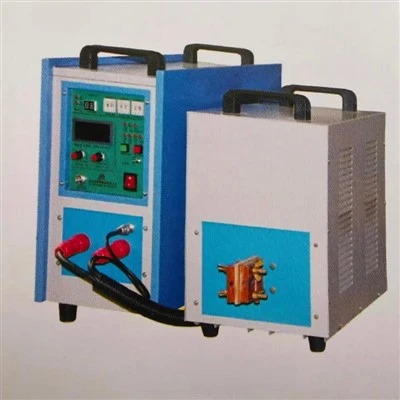
First, let’s define what “hazardous environment” actually means for welding. It’s not just a buzzword. For our industry, a hazardous space is one where explosive gases, flammable dust, or combustible vapors are present in concentrations high enough to ignite or explode. Think of oil and gas refineries (where residual hydrocarbon vapors linger around pipe fabrication), grain processing plants (grain dust is highly combustible), chemical manufacturing facilities (where solvent fumes hang in the air), or even underground mining operations (where methane gas is a constant risk). These spaces aren’t just “dangerous”—they’re classified by national and global safety bodies like OSHA (U.S.), CSA (Canada), and ISO, with strict rules about what equipment is allowed in them. So the short answer is: Yes, a spot welding machine can be used here—but not every machine. It all comes down to explosion protection, the unwritten rule of welding in high-risk spaces.
Most standard spot welding machines aren’t built for this. If you’ve ever used a basic resistance welder, you know it creates heat, carries electrical current, and produces tiny sparks when it fuses two metal pieces. In a room full of propane vapors, those sparks aren’t just a minor safety note—they’re a potential catastrophe. Standard machines have exposed electrical contacts, unencased transformer units, and no safeguards against arcing that could escape into the surrounding air. This is why so many early 2000s fabricators avoided hazardous space welding: the equipment just didn’t exist to make it safe. But that’s changed, and as a supplier, I’ve seen first-hand how modern engineering has closed that gap.
The core of a spot welding machine’s ability to work in hazardous environments lies in its design for intrinsic safety and explosion containment. Let’s unpack these terms, because they’re not just industry buzz—they’re the difference between a productive workday and an emergency response. Intrinsic safety means the machine’s electrical system is so low-voltage and low-current that any spark, arc, or heat it produces isn’t strong enough to ignite a flammable gas or dust. For example, intrinsic safety-rated spot welders limit their energy output to just 20 milliwatts, which is less power than a standard phone charger puts out. That’s a far cry from the 1,000+ watt output of a basic industrial spot welder, which is more than enough to set off a methane cloud. Then there’s explosion containment: these machines have fully sealed, pressurized enclosures around all live parts, so if a tiny, controlled spark does occur inside the machine, it can’t escape to ignite the surrounding atmosphere. The enclosure is made of thick, impact-resistant steel and pressure-tested to handle small internal blasts, so it acts as a barrier between the welding process and the hazardous space.
I’ve seen this play out with a client in the petrochemical industry a few years back. They had a project to repair steel support beams inside a refinery, where the air around the work zone had 20% of the lower explosive limit (LEL) for propane—way above OSHA’s safe threshold for open work. Their original plan was to outsource the welding to a shop outside the refinery, but that would’ve delayed the project by two weeks and added $12,000 in transportation and labor costs. When they reached out to me, we worked together to source an intrinsically safe spot welding machine, train their in-house welding team on its operation, and set up a dedicated, ventilated work bay within the refinery that met all safety classifications. They finished the project on time, cut costs by nearly 40%, and had zero safety incidents. That’s the power of matching the right machine to the right hazardous space—it’s not just about compliance, it’s about operational efficiency.
But here’s the catch: not all “hazardous environment-rated” spot welders are created equal. As a supplier, I’ve seen too many clients get burned by cheap, knockoff machines marketed as “explosion-proof” that don’t meet any official safety standards. For example, some machines might have a basic sealed enclosure but skip the intrinsic safety testing, so their electrical system can still produce a spark strong enough to ignite flammable dust. The only reliable way to verify a spot welding machine’s suitability for a hazardous environment is to look for third-party certifications. OSHA’s Class I, Division 1 and 2 ratings are non-negotiable for U.S. facilities—Class I covers gas/vapor hazards, Division 1 means the hazard is present 24/7, Division 2 means it’s only present occasionally. For global clients, ISO 3691 (the standard for industrial trucks, but relevant for welding equipment safety) and CSA C22.1 are the gold benchmarks. A machine without these labels isn’t worth the risk. It’s also important to match the machine’s rating to the specific hazard of your workspace: a machine rated for methane won’t cut it for a grain dust facility, because dust has a lower ignition temperature and requires different containment design.
Another key factor that many people overlook is the welding process itself. Even the most advanced intrinsically safe machine won’t protect you if your operating procedures are risky. For example, spot welding in a hazardous environment requires proper ventilation to remove any trapped fumes or dust around the weld zone. I always recommend that clients pair their spot welder with a local exhaust ventilation (LEV) system that pulls air away from the work area at a rate of at least 100 cubic feet per minute (CFM)— enough to clear any stray vapors that might build up. You also need to avoid welding near open flammable containers, and ensure that all non-essential electrical equipment (like phones, radios, or other tools) is turned off in the work zone. I’ve had clients skip these steps and face inspections that shut down their entire welding operation for a week— that’s a cost no one wants to deal with.
Maintenance is another piece of the puzzle. Hazardous environment-rated spot welding machines require regular, specialized care to keep their safety features intact. For example, the sealed enclosures need to be inspected for cracks or damage after every use, because even a small hole can let sparks escape. The electrical components need to be tested quarterly to ensure they’re still operating at the low, safe voltage required for intrinsic safety. As a supplier, I don’t just sell a machine and disappear— I provide ongoing maintenance support for all our hazardous environment-rated units, including annual third-party safety audits, spare parts kits tailored for high-risk work, and training for in-house maintenance teams. One of my long-term clients in the aerospace industry swears by this: they’ve had the same set of machines for 12 years, and our regular maintenance checks have never let them down during critical NASA and defense projects that required welding in controlled, low-oxygen hazardous zones.
Now, let’s talk about a common misconception: some people think that welding in a hazardous environment requires a trade-off in quality. But that’s just not true. Modern spot welding technology has advanced so much that intrinsically safe machines deliver the same, if not better, weld strength and consistency as standard machines. They use precise current control and advanced electrode pressure systems, so you get clean, uniform welds every time— no more weak spots that would require rework, which adds time and risk in a hazardous space. My auto body clients who work in facilities with solvent-based paint fumes use our hazardous environment spot welders all the time, and they say the welds are just as durable as anything they’d get in a standard shop. The only difference is the peace of mind that comes with knowing your team isn’t at risk.
If you’re still on the fence, let’s look at real-world data. A 2022 OSHA report found that 17% of industrial explosions in the U.S. were caused by faulty welding equipment in hazardous environments, costing companies an average of $1.5 million per incident in fines, downtime, and workers’ compensation. But the same report noted that facilities that used certified hazardous environment spot welding machines had a 92% reduction in these types of incidents. That’s not a coincidence— it’s the result of proper engineering, testing, and training.
At the end of the day, the answer to “Can a spot welding machine be used in a hazardous environment?” is a resounding yes— as long as you choose the right machine, follow safety protocols, and work with a supplier that understands both your operational needs and the strict requirements of high-risk workspaces. I’ve spent my career building relationships with fabricators, energy companies, and industrial facilities, not just selling equipment, and I know that the biggest investment you can make is in tools that protect your team and your bottom line. If you’re working in a hazardous environment, or looking to upgrade your welding equipment to meet safety standards, I’d be happy to walk you through the options tailored to your specific workspace and project needs. Reach out to discuss how we can help you work safely and efficiently, without compromising on quality.
Induction Heating Machine References
OSHA. (2022). Industrial Welding Safety Standards for Hazardous Workspaces. U.S. Department of Labor.
International Organization for Standardization. (2019). ISO 3691: Safety of Industrial Trucks. ISO.
Canadian Standards Association. (2021). CSA C22.1: Electrical Safety for Industrial Equipment. CSA Group.
National Fire Protection Association. (2020). NFPA 51B: Standard for Fire Prevention During Welding, Cutting, and Other Hot Work. NFPA.
Dongguan Huineng Welding Equipment Co., Ltd.
We are one of the most experienced spot welding machine manufacturers and suppliers in China. With a professional production team, we offer a wide range of products with superior quality. Please feel free to buy customized spot welding machine at competitive price from our factory.
Address: 530 Guantai Road, Xitou Village, Houjie Town, Dongguan City, Guangdong Province
E-mail: fengshanggang75@126.com
WebSite: https://www.huinengwelder.com/
