If you’ve ever pulled up to an oil depot’s loading rack on a hot summer afternoon, you might have seen thin, wispy plumes rising from the top of tanker trucks or storage tanks. Those aren’t just harmless steam—they’re volatile organic compounds (VOCs), the same compounds that make gasoline fumes flammable and contribute to ground-level ozone pollution. As a supplier of oil depot vapor recovery equipment, I’ve spent more than a decade watching operators struggle with two big problems: they can’t see exactly how their vapor recovery systems are performing in real time, and they’re often flying blind when it comes to catching small, costly inefficiencies before they become major compliance headaches. That’s where real-time monitoring data analysis for vapor recovery equipment comes in—and it’s not just a tech buzzword. It’s the difference between a system that meets regulatory requirements and one that cuts costs, reduces downtime, and keeps depot teams safe. Oil Depot Vapor Recovery Equipment

Let me start with what real-time monitoring actually means for vapor recovery systems, because a lot of folks I talk to mix it up with old-school, quarterly manual testing. Traditional vapor recovery at an oil depot works by capturing VOCs from the top of moving tanker trucks or static storage tanks, then routing those fumes through a condenser or adsorption unit to turn them back into liquid fuel that can be reused. Manual testing means someone from the depot will grab a sample with a hand-held detector every 90 days, haul it back to a lab, and get results weeks later. By then, if the recovery unit’s compressor is running inefficiently or a seal is leaking, the system might have been venting unprocessed fumes for months—running up compliance fines, wasting fuel, and creating safety risks.
Real-time monitoring changes that by installing tiny, wired or wireless sensors directly on every critical part of the vapor recovery system. That includes the vapor inlet lines (where fumes get pulled from tanks or trucks), the core recovery unit, the condenser, the gas outlet (where processed fumes either get vented or routed back to fuel lines), and even the seal points on pumps and valves. These sensors send data every 10 to 60 seconds to a cloud-based platform, or a local dashboard right in the depot control room, so operators can see what’s happening to the system right now, not three months from now.
Now, data analysis is what turns those 10-second sensor pings into action. It’s not just displaying numbers on a screen—it’s interpreting those numbers to spot patterns, catch failures early, and optimize performance. Let’s break down the most important metrics we monitor for our clients, because this is where the real value lives. First, there’s vapor concentration at the inlet. If that number spikes unexpectedly, it might mean a tanker is loading too fast, or a storage tank’s pressure is building faster than the recovery unit can handle. That used to only show up when a plume was visible, which meant the depot was already releasing pollution into the air. With real-time data, operators can slow the loading rate by 10% for five minutes to let the recovery unit catch up, no plume, no fine.
Next is system pressure and flow rate. Vapor recovery units work best at a specific pressure range—too low, and they can’t pull all the fumes out of a tanker; too high, and they stress the compressor, leading to premature failure. We’ve had a client in the Midwest whose data dashboard alerted them that their compressor pressure was dropping by 15% every Tuesday at 2 p.m. Turns out, that was when a local trucking company sent double the usual number of delivery trucks. Without real-time analysis, they would have thought the compressor was just wearing out, but adjusting their loading schedule to split deliveries across the day fixed the pressure drop, reduced compressor wear by 22%, and cut their annual maintenance costs by nearly $18,000. That’s not a guess—that’s actual data from the system.
Then there’s VOC removal efficiency, the big one for compliance. Regulators in the U.S. (via EPA) and EU (via EEA) require vapor recovery systems to remove at least 95% of VOCs from tank and truck fumes. For years, proving that meant those quarterly lab tests. But real-time analysis lets you calculate efficiency every minute, not every three months, and if it drops below 95% even for an hour, the system flags it so you can troubleshoot. We had another client who failed a regulatory audit because their quarterly test showed 93% efficiency, but after installing real-time monitoring, we found their adsorption unit’s carbon filters were degrading unevenly. By replacing just the half of the filters that were saturated, instead of all of them every six months, they cut filter costs by 35% and kept efficiency above 97% year-round.
What makes this work, though, isn’t just collecting data—it’s the ability to compare a depot’s data to industry benchmarks. A small regional oil depot might not have an in-house engineering team to analyze hundreds of data points, so we build custom algorithms into our monitoring platforms that reference thousands of similar installations. For example, if a client’s vapor inlet temperature is rising by 2 degrees above the average for depots in their climate, the system will flag that as a potential issue. Higher inlet temperature makes the vapor less dense, so the recovery unit works harder. Our algorithm might suggest increasing the flow rate slightly or adding a small, low-energy cooler to the inlet line, which costs a fraction of what it would to replace the whole system.
I’ve heard operators say, “Why do I need this? My system works fine when I test it.” But the truth is, vapor recovery systems have a lot of moving parts—seals that wear out, filters that clog, compressors that lose efficiency as they run. A study from the American Petroleum Institute found that 30% of oil depot vapor recovery systems underperform at any given time, usually because small, undetected issues build up over months. Real-time data analysis catches those issues before they turn into shutdowns or fines. Last year, a client in Texas had a sensor alert at 2 a.m. that a seal on their vapor outlet line was leaking. A technician went out at first light, replaced the seal for $120, and avoided a potential fine of up to $37,500 per day (the current EPA penalty for excessive VOC emissions) plus the risk of a safety incident with flammable fumes. That’s the kind of win that manual testing can never deliver.
Now, let’s talk about the practical side of installing these systems, because I know operators worry about cost and downtime. A common misconception is that real-time monitoring requires tearing apart an existing vapor recovery system and replacing most of it. At our company, we design our sensors to be retrofittable—most can be installed in a matter of hours during routine shutdowns, no special modifications needed. The cloud dashboard is web-based, so operators can access it from their phones, laptops, or control room screens, no new hardware required. For a typical medium-sized oil depot, the total cost of installing the monitoring system is paid back within 12 to 18 months from reduced fuel loss, lower maintenance, and avoided fines. And that’s before you count the environmental benefits, which are a big part of meeting corporate sustainability goals these days.
Another part of real-time analysis that’s often overlooked is predictive maintenance. Instead of waiting for a compressor to break down and shutting down the whole loading rack for 48 hours, data analysis can predict when a part will fail up to 30 days in advance. For example, if the sensor data shows the compressor’s vibration level is increasing steadily, that’s a sign of bearing wear. We can schedule a replacement during a planned slow week, not a peak loading day, which eliminates unplanned downtime that can cost depots thousands of dollars an hour in lost revenue. A client in Florida told us that after installing our monitoring system, their unplanned maintenance dropped by 60% in the first year, and loading rack uptime went from 92% to 98.5%.
I know some operators are skeptical of new technology, especially when it comes to regulatory compliance. They worry that real-time data will add more reporting work, or that regulators won’t accept it as proof of performance. But that’s changing fast. The EPA now allows continuous emissions monitoring data (which is exactly what real-time vapor recovery analysis produces) as a valid compliance record, instead of just quarterly manual tests. The EU’s Industrial Emissions Directive also accepts real-time monitoring data for permit reporting, as long as the systems are calibrated regularly. So not only is this technology a tool to save money, it’s also a way to make compliance easier, not harder.
Let me give you a concrete example of how this works in day-to-day use. Last summer, I was at a depot in Ohio that handles 12 million gallons of gasoline a month. Before our monitoring system, their team would do manual tests every three months, and they’d had two minor fines in two years for VOC emissions that popped up between tests. After installing the sensors and analysis platform, their operator logs now show that every time the vapor inlet concentration rises above 1000 ppm, the system automatically sends an alert to their phone. They can then adjust the loading rate for the next truck, or run the recovery unit’s auxiliary fan for 15 minutes, and the concentration drops back down. In the first six months, they didn’t have any emissions incidents, their filter replacement schedule shifted from every six months to every nine months, and they saved over $21,000 in fuel that was being lost to unprocessed vapors. That fuel wasn’t toxic to discard—it was gasoline, worth about $2 per gallon, so saving 10,500 gallons added up fast.
A lot of people ask me, “Is real-time monitoring just for big oil companies?” No, it’s for any depot that handles bulk fuels, whether it’s a small regional operation or a major national brand. We’ve installed systems for depots that handle as little as 2 million gallons a month, and the return on investment is just as strong. The key is working with a supplier who designs the system to fit your specific operation, not a one-size-fits-all setup. A depot in a cold climate has different pressure and temperature challenges than one in a hot, humid area, so the data analysis algorithms need to account for that.
At the end of the day, oil depot vapor recovery is about three things: compliance, cost efficiency, and safety. Real-time monitoring data analysis ties all three together. It removes the guesswork, turns raw sensor data into actionable insights, and gives operators the tools to keep their systems running at peak performance 24/7, not just during quarterly tests. If you’re still relying on manual testing to track your vapor recovery system, you’re leaving money on the table, risking compliance fines, and missing out on opportunities to make your operation safer and more efficient.
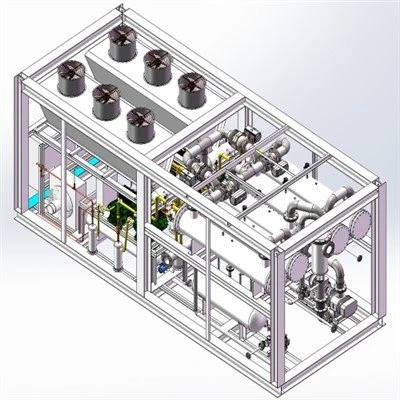
If you’re ready to stop flying blind with your oil depot vapor recovery equipment and start leveraging real-time data to cut costs, avoid fines, and improve performance, we’re here to help. We can conduct a free on-site assessment of your current system, show you how real-time analysis would work for your specific operation, and walk you through every step of installation and integration.
Membrane Separation Vapor Recovery Equipment References
- American Petroleum Institute. (2022). Vapor Recovery System Performance Monitoring and Optimization Report. API Publishing.
- U.S. Environmental Protection Agency. (2023). Compliance Guidance for Bulk Petroleum Storage Tank Vapor Recovery Systems. EPA Office of Air and Radiation.
- European Environment Agency. (2022). Real-Time Emissions Monitoring for Industrial Oil and Gas Facilities. EEA Technical Report.
- National Pollution Discharge Elimination System (NPDES). (2021). Vapor Recovery Unit Data Reporting Standards. U.S. Environmental Protection Agency.
- International Organization for Standardization. (2023). ISO 16555: Petroleum and Liquid Petroleum Products—Vapor Recovery Systems. ISO Publishing.
Shandong Kosman Environmental Technology Co., Ltd.
Shandong Kosman Environmental Technology Co., Ltd. is one of the leading manufacturers and suppliers of oil depot vapor recovery equipment in China, featured by quality products and low price. Please rest assured to buy advanced equipment made in China here and get pricelist from our factory. Customized orders are welcome.
Address: No. 5, single-story steel frame structure, Electromechanical Industrial Park, Chengwu County Economic Development Zone, Heze City, Shandong Province
E-mail: keshiman2021@126.com
WebSite: https://www.kosman-vrufactory.com/
