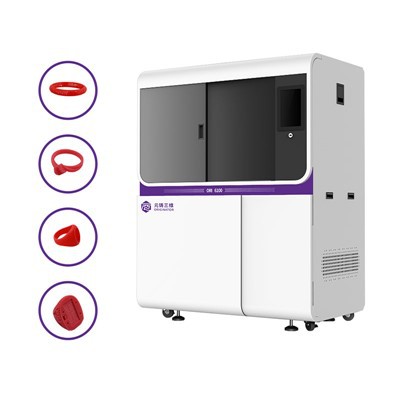
Hey there! I’m a supplier of Resin 3D printers, and I often get asked about how to choose the best print orientation for these nifty machines. It’s a crucial decision that can make or break your 3D printing project. So, let’s dive right in and explore this topic together. Resin 3D Printer
Why Print Orientation Matters
First off, you might be wondering why print orientation is such a big deal. Well, it affects several aspects of your print. The quality of the final product, the amount of support material needed, and the printing time are all influenced by how you position your model on the build plate.
For instance, if you print a model with a large flat surface parallel to the build plate, it might adhere well, but it could also take longer to print layer by layer. On the other hand, if you print it at an angle, you might reduce the printing time, but you’ll probably need more support material to keep the model stable.
Factors to Consider
Surface Finish
The surface finish of your print is a major factor. When you print a model, the layers are stacked on top of each other. If a surface is parallel to the build plate, the layers will be visible, which can result in a rougher finish. However, if you orient the model so that the important surfaces are at an angle, the layer lines will be less noticeable, giving you a smoother finish.
For example, if you’re printing a figurine and you want the face to look smooth, you should orient it so that the face is not parallel to the build plate. This way, the layer lines won’t be as prominent on the face, and it will look more realistic.
Support Material
Support material is another crucial consideration. Resin 3D printers often require support material to hold up overhanging parts of the model during the printing process. The amount of support material needed depends on the print orientation.
If you print a model with a lot of overhangs parallel to the build plate, you’ll need a significant amount of support material. This not only adds to the cost of the print but also makes the post – processing more time – consuming. By adjusting the print orientation, you can minimize the amount of support material. For example, if you rotate a model so that the overhangs are at a steeper angle, the printer might need less support to keep the overhangs from collapsing.
Printing Time
Printing time is also affected by the print orientation. In general, printing a model with a smaller cross – sectional area parallel to the build plate will be faster. This is because the printer has to cure less resin per layer.
Let’s say you have a long, thin model. If you print it standing up, the cross – sectional area of each layer will be small, and the printer can move through the layers more quickly. But if you print it lying down, the cross – sectional area will be larger, and the printing process will take longer.
Different Print Orientations and Their Pros and Cons
Horizontal Orientation
Printing a model horizontally means that the longest dimension of the model is parallel to the build plate. One of the main advantages of this orientation is that it provides a large contact area with the build plate, which can improve adhesion. This is especially useful for models with a flat base.
However, horizontal printing often requires a lot of support material, especially if the model has overhangs. Also, the surface finish of the top and bottom surfaces can be rough due to the visible layer lines.
Vertical Orientation
Printing vertically means that the longest dimension of the model is perpendicular to the build plate. This orientation can reduce the amount of support material needed, especially for models with a tapered shape. It can also result in a faster print time since the cross – sectional area of each layer is usually smaller.
But the adhesion to the build plate can be a problem with vertical printing. If the base of the model is small, it might not stick well to the build plate, causing the model to detach during the printing process.
Angled Orientation
Angled orientation involves positioning the model at an angle on the build plate. This can be a great compromise between horizontal and vertical printing. It can reduce the amount of support material needed compared to horizontal printing and improve the surface finish.
However, finding the right angle can be tricky. If the angle is too steep, the model might require more support material, and if it’s too shallow, you won’t get the full benefits of the angled orientation.
Tips for Choosing the Best Print Orientation
Analyze the Model
Before you start printing, take a close look at your model. Identify the important surfaces, the overhangs, and the shape of the model. If there are parts that need a smooth surface finish, make sure to orient them in a way that minimizes the visibility of layer lines.
Test Different Orientations
Don’t be afraid to test different print orientations. Print small test models in different orientations to see which one works best for your specific model. This can save you a lot of time and material in the long run.
Use Software Tools
Most 3D printing software has features that can help you analyze the print orientation. These tools can show you how much support material will be needed, the estimated printing time, and the potential surface finish for different orientations. Use these tools to make an informed decision.
Conclusion
Choosing the best print orientation for a Resin 3D printer is a combination of art and science. It requires you to consider multiple factors such as surface finish, support material, and printing time. By analyzing your model, testing different orientations, and using software tools, you can find the optimal print orientation for your project.
MJP 3D Printer If you’re in the market for a Resin 3D printer or have any questions about print orientation, feel free to reach out. I’m here to help you make the most of your 3D printing experience. Whether you’re a hobbyist or a professional, getting the print orientation right can take your 3D prints to the next level.
References
- "3D Printing Basics: Orientation and Supports" by All3DP
- "Resin 3D Printing Guide" by MatterHackers
Hangzhou Originator 3D Technology Co., Ltd.
Hangzhou Originator 3D Technology Co., Ltd. is one of the most experienced resin 3d printer manufacturers and suppliers in China. With abundant experience, we warmly welcome you to wholesale high quality resin 3d printer made in China here from our factory. Contact us for more details.
Address: Room 403, Building 2, Block B, Heda Incubation Park,No. 452, 6th Avenue, Xiasha, Qiantang District,Hangzhou, Zhejiang, China
E-mail: Sales@originator3d.com
WebSite: https://www.originator3d.com/
