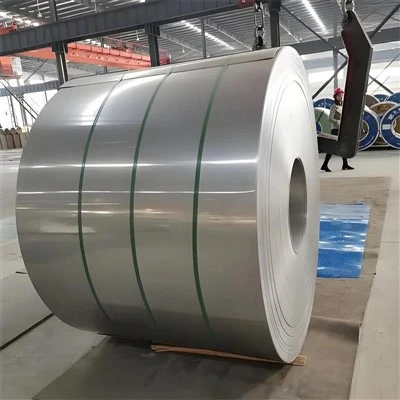
Hey there! As a stainless steel supplier, I get asked a lot about the difference between hot-rolled and cold-rolled stainless steel. It’s a pretty common question, and it’s important to understand the distinctions if you’re in the market for stainless steel products. So, let’s dive right in and break it down. Stainless Steel
How They’re Made
First off, let’s talk about how these two types of stainless steel are made. The way they’re processed really affects their properties, which can influence how well they work for different jobs.
Hot-Rolled Stainless Steel
Hot-rolled stainless steel is made by heating the stainless steel billets or slabs to super high temperatures—usually over 1700°F (about 925°C). Then, they’re passed through a series of rolling mills to get the size and shape they need.
The high temperature makes the steel soft and easy to work with. It’s like when you heat up a piece of clay; it becomes more malleable. This process is great for making large quantities of steel quickly. It’s also good for making things like structural beams, railroad tracks, and large pipes.
But here’s the deal: because the steel cools down after it’s rolled, it can shrink a little bit. And sometimes, it might have a bit of a rough surface finish. It’s not super smooth like some other types of steel, but that’s not always a bad thing.
Cold-Rolled Stainless Steel
Cold-rolled stainless steel starts off as hot-rolled steel. After the initial hot rolling, the steel is then further processed at room temperature. This involves more precise rolling and sometimes additional processes like annealing (heating and then slowly cooling the steel to make it softer).
The cold-rolling process makes the steel stronger and gives it a much smoother surface finish. It’s like taking a rough piece of wood and sanding it down until it’s smooth and shiny. Cold-rolled steel is also more dimensionally accurate, which means it’s closer to the exact size and shape you need.
This type of steel is often used for things where appearance and precision matter, like in the automotive industry for making car body panels, or in the manufacturing of appliances like refrigerators and washing machines.
Physical Properties
Now, let’s look at the physical properties of hot-rolled and cold-rolled stainless steel. These properties can really impact how you use the steel in different applications.
Surface Finish
As I mentioned before, hot-rolled stainless steel usually has a rough surface. It might have some scale (a thin layer of oxidized metal) on it, which gives it a kind of dull, matte look. This scale can be removed, but it takes some extra work.
On the other hand, cold-rolled stainless steel has a smooth, shiny surface. It looks really nice and is often used in applications where appearance is important. You can see a big difference just by looking at a piece of hot-rolled and cold-rolled steel side by side.
Dimensional Accuracy
Hot-rolled steel can have some variations in size and shape because it shrinks as it cools. The tolerances (the allowable amount of variation) are usually a bit wider than with cold-rolled steel. This means that if you need a very precise piece of steel, hot-rolled might not be the best choice.
Cold-rolled steel, on the other hand, is much more dimensionally accurate. The rolling process at room temperature allows for tighter tolerances, so you get a piece of steel that’s closer to the exact size and shape you specified.
Strength and Hardness
Cold-rolled stainless steel is generally stronger and harder than hot-rolled steel. The cold-rolling process work hardens the steel, which means it makes the steel more resistant to deformation. This is great for applications where the steel needs to withstand a lot of stress, like in the construction of buildings or in machinery parts.
Hot-rolled steel is also strong, but it’s not as hard as cold-rolled steel. It’s more ductile, which means it can be bent and shaped more easily without cracking. This makes it a good choice for applications where you need to do some forming or bending, like in the fabrication of metal furniture.
Applications
The differences in physical properties mean that hot-rolled and cold-rolled stainless steel are used in different applications.
Hot-Rolled Stainless Steel Applications
- Structural Components: It’s commonly used for making structural beams, columns, and supports in buildings and bridges. The strength and ductility of hot-rolled steel make it suitable for these applications where it needs to handle large loads.
- Pipelines: Hot-rolled steel is often used to make large-diameter pipes for transporting fluids like oil and gas. The rough surface finish isn’t a problem in these applications, and the cost-effectiveness of hot-rolled steel makes it a popular choice.
- Railroad Tracks: The high strength and ability to withstand heavy loads make hot-rolled steel ideal for railroad tracks. It can handle the constant pressure from trains without deforming too much.
Cold-Rolled Stainless Steel Applications
- Automotive Industry: Cold-rolled steel is used to make car body panels, doors, and hoods. The smooth surface finish and high dimensional accuracy are important for the appearance and fit of these parts.
- Appliances: It’s also used in the manufacturing of household appliances like refrigerators, washing machines, and ovens. The shiny surface and resistance to corrosion make it a good choice for these applications.
- Precision Machinery: Cold-rolled steel is used in the production of precision machinery parts where accurate dimensions and high strength are required.
Cost Considerations
When it comes to cost, hot-rolled stainless steel is generally cheaper than cold-rolled steel. The hot-rolling process is more efficient and requires less energy, which keeps the production costs down.
However, you need to consider the overall cost of using the steel in your project. If you need a precise, smooth finish and high strength, cold-rolled steel might be worth the extra cost. On the other hand, if you can tolerate a rough surface and some variation in dimensions, hot-rolled steel could save you money.
Conclusion
So, there you have it! The main differences between hot-rolled and cold-rolled stainless steel come down to how they’re made, their physical properties, their applications, and their cost. As a stainless steel supplier, I can help you figure out which type of steel is right for your specific needs. Whether you’re building a skyscraper, manufacturing a car, or just need a small piece of steel for a DIY project, I’ve got you covered.
Aluminum Coil If you’re interested in purchasing stainless steel, whether it’s hot-rolled or cold-rolled, feel free to contact me. We can have a chat about your project, and I’ll do my best to provide you with the right product at a competitive price. Looking forward to working with you!
References
- "The Basics of Stainless Steel Rolling Processes" – Metalworking Magazine
- "Stainless Steel Properties and Applications" – Industrial Metals Handbook
- "Comparing Hot-Rolled and Cold-Rolled Steel" – Steel Manufacturing Journal
Wuxi Jin Ming Jian De Industry & Trade Co., Ltd.
Wuxi Jin Ming Jian De Industry & Trade Co., Ltd. is one of the most professional stainless steel manufacturers and suppliers in China, also supports customized service. With abundant experience, we warmly welcome you to wholesale CE approved stainless steel in stock here from our factory. If you have any enquiry about quotation, please feel free to email us.
Address: 2102-2105, Yuexing Building, Guangnan Road, Liangxi District, Wuxi City, Jiangsu Province, China.
E-mail: info@wxjmjdss.com
WebSite: https://www.jmjdsteelexp.com/
