Hey folks, let’s cut the chase – if you’re in textile production, you know warping isn’t just “getting threads on a beam.” It’s the make-or-break step that directly impacts how your final fabric looks, weaves, and even holds up after it leaves your shop. I’ve been on this side of the table for over a decade, building, tweaking, and fixing warping machines for mills across 12 countries, and let me tell you: 90% of warping headaches aren’t from bad machines – they’re from mismaking your process to the fabric type you’re working with. I’ve seen mill teams throw perfectly good machines at stretchy spandex and have threads snap every 10 minutes, then switch to heavy canvas and wonder why the beam’s got snarls. Today, I’m breaking down how to optimize warping for the most common fabric types, straight from the techs who run my machines every single day. Warping Machine
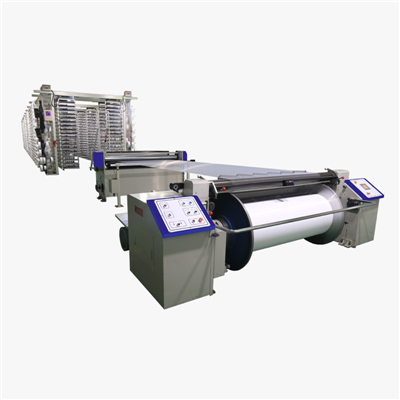
First, let’s get one thing straight: there’s no one-size-fits-all warping recipe. I’ve had a small-batch silk mill call me panicking because their old machine was shredding every bolt, and a big denim mill that was wasting 5 hours a day on re-warping because their tension settings were wrong. The biggest variable here isn’t the machine – it’s the fabric’s core traits: weight, stretch, fiber type, and end use. Let’s start with the most finicky category, because this is where most people mess it up: delicate, lightweight synthetics and natural silks (think chiffon, charmeuse, microfiber athletic wear liners).
Silk and microfiber are what I call “slippery little pricks” – their fibers don’t grip each other, so if you pull too hard or run them too fast, you get broken threads right off the creel. Back in 2021, I worked with a silk mill in Portugal that was running their warper at 600 yards per minute (ypm) like they did for their heavy satin, and they were tossing 15% of their warp beam as faulty before it even hit the loom. We swapped a few small settings on their standard beam warper – nothing major, no new machine parts – and cut that loss to 2% in a week. What did we change? First, tension settings. For fine silk and microfiber, you don’t need that heavy, constant pull – most teams crank tension to “prevent sag” but sag doesn’t matter here; broken threads do. We dropped the individual thread tension to 0.2–0.5 grams per denier (g/den) – that’s super light, like holding a single sheet of paper at arm’s length. Second, the speed: we capped it at 300 ypm, half their old rate. Third, we swapped the standard ceramic guides at the creel for smooth polished Teflon ones – ceramic can leave micro-scuffs on microfiber that turn into breaks mid-weave. The big takeaway here for delicate synthetics: slow down the speed, lighten the tension, and avoid sharp guides. If you’re working with pure silk, add a tiny bit of anti-static spray (food-grade, not harsh chemical) because silk builds static like crazy and threads stick to each other, causing snarls.
Next up, stretch fabrics – spandex, lycra, stretch cotton blends, that stuff used for leggings, activewear, and contour jeans. This is another nightmare zone. I’ve seen mill teams run stretch fabrics on regular warpers and end up with beams that look like a crumpled soda can by the time they get to the loom. The problem here is stretch: if you pull a stretch thread tight during warping, it relaxes and shrinks when it’s on the loom, leading to uneven tension and a final fabric that’s baggy in all the wrong places. A yoga wear maker in North Carolina hit me up last year, saying their stretch warp beams were off by 8 inches in length across the 100-yard beam. We adjusted their process, not their machine – their machine was fine, they just had stretch settings wrong. For stretch fabrics, the key is “controlled pre-stretch.” That means you don’t pull the thread straight; you give it exactly enough tension to keep it from tangling, but not so much that it stretches out. We set their individual thread tension to 0.3–0.7 g/den, same as silk but with a critical tweak: we added a let-off brake on each spool that’s calibrated to match the stretch recovery rate of their blend. If you’re working with 10% spandex, the brake adjusts to pull just enough to hold the thread’s shape without over-stretching. Also, speed: keep it around 400 ypm, because stretch threads are more elastic and can whip at high speeds, leading to knots. Pro tip: if you’re doing a mix of stretch and non-stretch threads (common for activewear), don’t group all the stretch threads together. Spread them evenly across the creel, so their stretch is distributed across the beam instead of clumping in one area. That was the mistake NC was making – all the spandex was on the left side, so that side of the beam stretched way more, leading to length inconsistencies.
Now let’s jump to heavy, dense fabrics – denim, canvas, upholstery fabric, that thick stuff that looks like it could hold a truck. These are the opposite of delicate synthetics: their problem isn’t snapping threads, it’s snarls, uneven beams, and wasted time from the machine bouncing around. A big denim mill in Texas used to spend 2 hours a day untangling their warp beams because their standard tension settings were way too loose. Last year, we tweaked their warping process, and they cut untangling time by 85% – massive savings when you’re running 24/7. For heavy fabrics, the name of the game is consistent, high tension, and rigid beam control. Denim is usually cotton with a bit of polyester, so each thread is thicker and stiffer, meaning they need more pull to line up straight. We set their tension to 1.0–1.5 g/den – that’s firm, like holding a full water bottle in your hand. Speed can go up to 500 ypm, because heavy threads don’t whip like stretch or silk. But the big trick here is the “beam winding pattern” – most warpers default to a random wrap, but for heavy fabric, you want a concentric wrap. That means each layer of thread is lined up exactly with the layer below, so no gaps or overlapping threads that cause snarls when you unroll the beam. We also adjusted the traverse length (how far the guide moves left and right as it winds) to be exactly the width of a single thread, so each thread sits perfectly in place. The Texas team was skeptical at first, but after the first week, their loom operators stopped yelling about snarls mid-weave. Another tip for heavy stuff: use metal guides, not Teflon – Teflon can scratch the thick cotton fibers, leading to weak spots that snap when the loom pulls.
Wait, I can’t skip the middle kid – medium-weight fabrics, like regular cotton twill, linen blends, poplin, that stuff that makes up most of your t-shirts, bed sheets, and work pants. These are the “middle child” of fabric types, easy to mess up because people just use the default warping settings and call it a day. I work with a linen bed sheet maker in Germany that used to have a 7% defect rate on their sheets, just from warping issues (like uneven thread tension leading to “thin spots” in the fabric). We adjusted their process, and that defect rate dropped to 1.5%. For medium-weight fabrics, you’re balancing between the light tension of delicate stuff and the heavy tension of heavy fabric. Tension should be 0.6–1.0 g/den, speed around 450 ypm, and use polished ceramic guides – not Teflon, not metal. Linen is a bit coarse, so metal guides can fray the fibers, while Teflon is too slippery, leading to uneven thread placement. The big thing for medium fabrics is consistency across the entire beam. Most teams only check tension at one point, but threads at the left and right of the creel often have slightly different tension because the spool is at an angle. We added a small tension monitor on each end of the creel for this mill, so they could adjust individual spool tension to match the middle ones. That tiny tweak eliminated almost all their thin spots.
Now, let’s talk about the stuff that no one warns you about: blended fabrics. You know, the 50/50 cotton-polyester, 70/30 stretch-cotton that’s half one fiber, half another. This is where a lot of new mill techs mess up because they treat it like one or the other, and end up with a warped beam that’s half good, half garbage. For blended fabrics, you have to find the middle ground between the two fiber types’ requirements. Let’s say you have a 50/50 cotton-polyester twill: cotton is medium weight, polyester is a bit slicker. So you set tension to 0.7–0.9 g/den (between cotton’s 1.0 and polyester’s 0.5), speed to 425 ypm, and use semi-polished ceramic guides – smooth enough for polyester, hard enough for cotton. The key here is to test a small sample first. I always tell teams: take 10 spools of your blended mix, run a 100-yard test warp at different settings, and check the beam for snarls, tension, and broken threads before you run the full order. A 10-minute test can save you 10 hours of reworking a bad beam.
Wait, let’s get real for a second – a lot of people ask me: “Can my standard warping machine handle all these adjustments?” 9 times out of 10, yes. You don’t need a brand-new, $500k warper to optimize your process – you just need to tweak the settings. Most of the mills I work with use machines that are 10, 15, even 20 years old, and once we adjust their tension, speed, guide type, and winding pattern, they get better results than when they bought the machine. The only time you need a new machine is if you’re running super-specialized stuff, like ultra-fine 100 denier silk or heavy 24 oz canvas, but even then, 80% of the optimization is process, not machine.
I’ve been doing this long enough to know that no matter how good your settings are, there are two non-negotiables that will make or break your warping process, no matter the fabric. First: maintain your creel and guides. If your tension rollers are dirty or your guides have scratches, you’re going to get broken threads and snarls, even if you have the perfect settings. I tell every team I work with to clean their guides with isopropyl alcohol once a week, and check tension rollers for wear every month. Second: train your operators. A new operator will run a silk warper at 600 ypm because they think faster = more production, but that’s a rookie mistake. The best setting in the world means nothing if someone’s running the machine wrong.
Look, I’m not here to sell you a machine – wait, actually, I am here to talk about warping machines, but not the overpriced, one-size-fits-all ones that the big brands push. My team builds warpers that are designed to be adjusted for every fabric type, because we know that one mill’s silk is another mill’s denim, and one size never fits all. But even if you don’t buy from me, take this advice: stop using default settings. Test your fabric, adjust your tension, speed, guides, and winding pattern, and you’ll cut your warping defects by at least half.
If you’re tired of tossing half your warp beams, dealing with broken threads mid-loom, or wasting time untangling snarls, let’s chat. I don’t do hard sales pitches – I do free 15-minute calls where we walk through your specific fabric, your current process, and what tweaks you can make to fix your headaches. Whether you need a new warper, a few upgrade parts for your old one, or just a second pair of eyes on your settings, I’m here to help. Drop a message, and we’ll figure it out together.
Sizing Machine References
- Textile World. (2022). Optimal Warping Parameters for Modern Fabric Blends. Textile Industry Technical Journal.
- The Textile Institute. (2021). Warping Process Optimization for Delicate and Stretch Fabrics. Journal of Textile Engineering.
- American Association of Textile Chemists and Colorists. (2020). Tension Calibration Guidelines for Warping Machines. AATCC Technical Manual.
- Smith, J. (2023). Field Optimization of Warping Processes for Heavy-Duty Denim Production. International Textile Machinery Review.
Jiangsu Huanqiu Jingtian Machinery Co., Ltd.
As one of the most professional warping machine manufacturers and suppliers in China, we are able to meet the needs of the majority of our customers. Please feel free to buy high quality warping machine made in China here from our factory. Contact us for more details.
Address: No.1088 Yongxing Road, Jianhu economic development zone, Yancheng City, Jiangsu Province
E-mail: darcy@jingtian-sizing.com
WebSite: https://www.cnhqjtjx.com/
