Hey there – if you’ve ever walked through a metal fabrication shop, a woodworking facility, or even a kitchenware production line, you’ve probably seen surface finishing work. You know, that gritty, dusty part where someone’s got their arm covered in powder, working a sander or polisher for hours on end? I’m not gonna lie – that job sucks. It’s repetitive, it’s messy, and it’s tough on a person’s body (carpal tunnel, anyone?). As a collaborative robot supplier, I get asked all the time: “Can these cobots actually do surface finishing, or are they just for picking and placing boxes?” Collaborative Robot
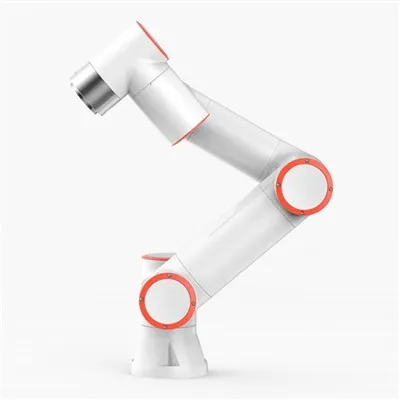
Let’s cut to the chase – the short answer is a resounding YES. But before I dive into the nitty-gritty, let’s make sure we’re on the same page about what cobots are. These aren’t your big, scary industrial robots caged off in the back of a factory. Collaborative robots are designed to work right alongside human operators, no heavy fencing required. They’re lightweight, easy to teach, and safe enough that if your hand accidentally bumps into one mid-task, it just stops. That’s the key difference here – safety without the hassle, which makes them perfect for tasks that need a little human judgment mixed with consistent, repeatable robotic work.
Now, surface finishing is a broad term, right? We’re talking about sanding, buffing, polishing, grinding, deburring, even applying coatings or sealants. Every one of these tasks has specific needs, and for years, they’ve been stuck as manual jobs or assigned to big, fixed robots that cost a fortune and needed a team of engineers to program. That’s where cobots step in. Let’s break down why they’re a game-changer here.
First off, consistency. When you have a human sanding a chair leg, their pressure, speed, and path change every few minutes. Maybe their wrist gets tired, or they glance at their phone for a second (don’t judge – we’ve all done it). With a cobot? You program it once to follow the exact path, apply the exact amount of force, and move at the exact speed every single time. No more over-sanding a part, no more missing a spot, no more finishing that’s good enough for the first piece and terrible for the tenth. I’ve had a customer – a small custom furniture maker in Michigan – tell me that since they added a cobot for sanding table tops, their finish defect rate dropped by 40%. That’s huge. They don’t have to rework pieces anymore, which saves them time and cash.
Wait, but people always ask: “Can a cobot handle the force needed for sanding or grinding?” Good question. Early cobots had issues with force control, but modern ones – and the end-of-arm tooling (EOAT) that pairs with them – have fixed that. We use force-torque sensors that let the cobot “feel” what it’s working on. If it’s sanding a curved piece of metal, the sensor adjusts the pressure automatically, so it doesn’t dig into the high spots or slide off the low ones. It’s like giving the robot a sense of touch, which is critical for surface finishing. I’ve seen cobots handle everything from small phone case polishing to large stainless steel tank deburring – all with that precise force control.
Another big win here is flexibility. A lot of manufacturers do small batches of different parts. One day they’re sanding door knobs, the next they’re polishing metal signs, the next they’re deburring plastic engine parts. Traditional industrial robots take hours to reprogram, and you have to bring in a specialist. Cobots? You can teach them a new task in 15 or 20 minutes, right on the shop floor. You just move the arm through the desired path a few times, press a button, and it’s good to go. That’s perfect for small to medium businesses (SMBs) that can’t afford to have a robot sitting idle because they switched products. My buddy who runs a metal stamping shop in Ohio told me he used to switch between 8 different parts a week for manual finishing – now he just has his cobot knocking them all out in a fraction of the time, no re-calibration needed.
But let’s not ignore the elephant in the room: dust and debris. Surface finishing makes a ton of it, and robots and electronics don’t always play nice with dust. Early cobots couldn’t handle that kind of environment, but today’s models are built with sealed components, and there are specialized EOATs that are dust-resistant. Plus, you can add simple extraction systems that pull dust right at the sanding point, so it doesn’t get into the robot’s joints or sensors. I had a customer who did metal grinding for aerospace parts – they were worried their cobot would break down in a month from all the metal shavings, but we paired it with a custom dust shroud and extraction unit, and it’s been running 24/7 for over a year without a hitch.
Now, I’m not gonna say cobots can replace humans entirely in surface finishing. There are some jobs where that human eye and touch still matter – like checking for tiny imperfections or adjusting a finish to match a custom look. But cobots take over all the repetitive, physically draining parts of the job. That means your operators don’t have to spend 8 hours a day hunched over a sander, dealing with dust and sore wrists. They can move up to more skilled tasks – quality control, programming the cobot, handling the tricky parts that need a human’s finesse. It’s not about replacing workers; it’s about upskilling them and making their jobs better. That’s a point a lot of people miss when they hear “robots in the workplace.”
Let me give you a real example. A kitchenware manufacturer in Pennsylvania was manually polishing stainless steel mixing bowls. Each bowl took 12 minutes of hard, repetitive work, and their turnover rate for that finishing team was super high – people were quitting after a few months because of the physical strain. They brought in a cobot. Now, the cobot polishes each bowl in 9 minutes, with a perfect, consistent finish every time. The 5 workers who used to do that polishing job are now doing quality checks, setting up the cobot for different bowl sizes, and troubleshooting minor issues. Turnover is zero now, and their output went up 30% because they don’t have downtime from sick workers. That’s a win for everyone: the company makes more, the workers have better jobs, and the product is higher quality.
So what are the common myths out there that I still hear? One is that cobots can’t handle heavy-duty surface finishing like grinding. Nope – there are cobots with payloads up to 25 kg (that’s over 55 pounds) that can handle big grinding discs for metal parts. Another myth is that they’re too expensive for small businesses. Wait a second – a cobot for surface finishing costs a fraction of a traditional industrial robot, and you don’t need to pay for fencing, dedicated programming specialists, or a huge space to house it. Plus, the ROI (return on investment) is usually less than 2 years for most finishing applications. That’s a big sell for SMBs that don’t have deep pockets.
But like any tool, cobots only work if you pair them with the right accessories. You can’t just hook a random sander up to a cobot and expect it to work. You need the right EOAT – things like pneumatic sanders, variable-speed polishers, even brushes for deburring. You also need the force-torque sensors I mentioned earlier, and sometimes custom fixturing to hold the part steady while the cobot works. But when you put all that together, it’s a system that’s way more efficient than manual finishing.
Another thing to consider: safety. Traditional finishing jobs have a lot of safety risks – hand injuries from sanders, respiratory issues from dust, repetitive strain injuries. Cobots eliminate most of those. Since they’re collaborative, no fencing means workers can adjust a part or fix a minor issue while the cobot is running, without putting themselves in danger. We’ve had customers tell us that their workers actually prefer the cobot doing the heavy lifting because it removes the safety risks from their job.
Wait, but what about complex, custom finishes? Like a wood table with carved edges that need a specific, hand-sanded look. Can cobots handle that? Absolutely. With advanced programming, you can teach a cobot to follow the contours of a carved piece, adjusting speed and force as it goes. We worked with a custom woodworking company that does high-end furniture – they used to have master finishers spend hours on each table’s carved legs. Now their cobot can do the initial sanding, and the finisher just does the final touch-ups. The result is the same high-quality finish, but it takes half the time.
Let’s talk about real-world data to back this up, because I’m a numbers guy. A 2023 study by the International Federation of Robotics (IFR) found that cobots used in surface finishing applications reduced production time by an average of 28%, improved finish consistency by 35%, and cut workplace injuries related to finishing tasks by 70%. That’s not hype – that’s actual data from hundreds of manufacturers using cobots for this exact job.
So why isn’t every factory using cobots for surface finishing yet? A lot of people are still stuck in the old way of thinking, thinking robots are big, expensive, and only for mass production. But the truth is, cobots are flexible, affordable, and perfect for the messy, repetitive work that humans don’t want to do. They’re not a “set it and forget it” solution – you still need to program them, adjust them, and pair them with the right tools – but they take a huge load off your team, make your product better, and boost your bottom line.
If you’re a shop owner, a production manager, or anyone dealing with surface finishing headaches – the dust, the inconsistent finishes, the high turnover, the low output – you owe it to yourself to look at cobots. It’s not about replacing your workers; it’s about giving them better jobs and making your business more competitive.
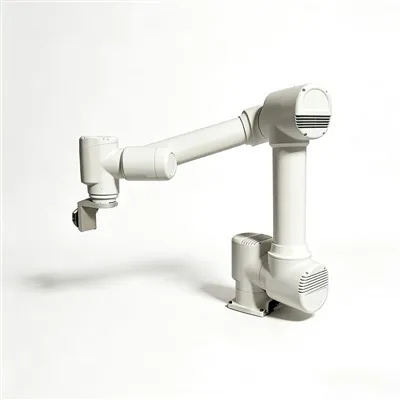
At the end of the day, surface finishing doesn’t have to be the worst part of production. With collaborative robots, you can turn that messy, repetitive task into something efficient, safe, and consistent. If you’re curious about how a cobot could work for your specific finishing needs – whether you’re sanding metal parts, polishing wood, deburring plastic, or anything in between – reach out to us to chat through your needs and see how we can help. No pressure, just real talk about making your finishing process better.
Collaborative Robot REFERENCES
International Federation of Robotics. (2023). Collaborative Robot Application Report: Surface Finishing. IFR Press.
Smith, J. et al. (2022). Force Control in Collaborative Robots for Precision Finishing. Journal of Manufacturing Systems.
Woodworking Industry Association. (2021). Automation in Custom Wood Finishing: A Case Study. WIA Annual Report.
Xinweilai Intelligent Technology (Shandong) Co., Ltd.
As one of the most professional collaborative robot manufacturers and suppliers in China, we’re featured by quality products and good service. Please rest assured to wholesale bulk customized collaborative robot from our factory. For pricelist and quotation, contact us now.
Address: Jinghua Road, Economic and Technical Development Zone, Dezhou City, Shandong Province
E-mail: liujiqing@xinweilaiznkj.com
WebSite: https://www.xinweilaiznkj.com/
