If you’ve ever spent 10 hours in a conference room arguing a motion, drafting a brief, or just quietly waiting for a judge to call your case, you know one thing: your chair can make or not just your comfort, but your whole day. When a law firm reaches out to me as an office sofa supplier, most partners don’t show up wanting a “cool” couch—they show up wanting something that doesn’t look cheap in client meetings, that supports their senior associates after back-to-back depositions, and that can hold up when a summer clerk falls asleep on it during a long team retreat. After 12 years doing this, I’ve learned that choosing an office sofa for a law firm isn’t about picking the softest fabric or the trendiest frame. It’s a balance of brand perception, employee well-being, and brutal everyday functionality—and almost every firm gets at least one part wrong on their first go-around. Office Sofa
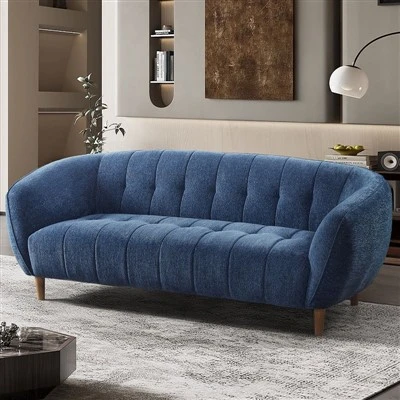
Let’s start with the room where 90% of the decision happens: client-facing spaces. I once worked with a mid-sized litigation firm in downtown Chicago that bought a sleek, low-profile leather sofa for their main conference room on a tight budget. It looked sharp in photos for their website—until their first big corporate client meeting, when the lead counsel, a 6’4” senior partner, sank down too fast and the sofa’s thin seat cushion bottomed out. He spent the next 20 minutes shifting his weight, pulling at his suit pants, and cutting off half his answers because he was too focused on not falling off. By the end of the meeting, the client’s legal director had barely made eye contact with him. That firm ended up calling me three months later to replace it, because in legal work, trust is built in those first 15 minutes of a meeting, and a sofa that makes someone uncomfortable undermines that instantly.
For client-facing sofas, the rule I swear by is: sturdiness beats style, always. Legal professionals sit in suits for 4–6 hours at a stretch in conference rooms. A sofa with a kiln-dried hardwood frame is non-negotiable—no particleboard, no MDF, because those crumble under 200+ pounds day after day. I can source a fully welded steel frame if a firm wants something extra durable, but hardwood is the sweet spot: it doesn’t feel industrial, and it won’t bend after a year. The seat cushion density is even more important: for client spaces, we use a 2.8 lb density polyurethane foam core wrapped in a 1-inch layer of high-resilience foam. This isn’t the kind of cushion that feels like a cinder block, and it’s not the kind that collapses after 10 uses. It’s the middle ground that says “we care about your comfort” without saying “we don’t take this meeting seriously.”
Next up: associate and partner break rooms, and private lounge spaces. These are the areas that get overlooked but end up driving retention—something law firms are now fighting harder for, since the Great Resignation hit and junior lawyers started asking why they’re expected to work 80-hour weeks in a space that treats them like afterthoughts. I worked with a New York corporate law firm two years ago that had a break room with a beat-up 90s-era fabric sofa that no one sat on. Their summer survey showed 62% of associates said “poor work environment” was a top reason they’d look for other jobs. We replaced that sofa with a modular fabric option that could fit 3–4 people, with lumbar pillows, and suddenly the break room became a spot where associates gathered to brainstorm, vent, or just take a 10-minute break without leaving the office. That’s the kind of ROI a lot of firm partners don’t calculate: a $1,500 sofa that keeps associates from quitting is way cheaper than the $50k it costs to hire and train a new associate.
For internal lounge sofas, modularity and durability are key. Associates will move them around to fit impromptu meetings, spill coffee on them (not if we can help it, but when), and drag them into conference rooms for informal client check-ins. So we use performance-grade fabrics for these—think a polyester blend with a 50,000 double-rub count, meaning it can withstand 50,000 abrasions before it starts to look worn. It’s stain-resistant, easy to wipe down with a damp cloth, and doesn’t hold odors from the leftover lunch someone might leave on it. And since most internal spaces don’t need that formal “client-ready” look, we can get creative with color—navy, charcoal, even a muted forest green—to keep morale up without clashing with the firm’s branding.
Then there’s the tricky part: private offices. A lot of partners think their private office sofa should be an exact copy of their desk chair—something sleek, leather, formal. But here’s what they don’t realize: partners use their private office sofas for more than just meeting with clients. They nap during lunch, they work on their laptops while waiting for documents to print, they sit and talk to associates who need to vent about a case. I had a senior partner at a Boston firm tell me he used his first private office sofa only twice—once when he spilled coffee on it, and once when he felt too stiff from his desk chair to sit anywhere else. We replaced it with a deep-seated leather sofa with a built-in lumbar support, and a year later he told me it was the best investment his firm made that year. For private office sofas, ergonomics and personalization matter more than any showy detail. We can add adjustable lumbar cushions, armrests that pivot slightly, and even custom leather treatments—like a semi-aniline finish that gets softer with use, instead of the stiff, shiny leather that looks good in photos but feels like plastic.
Wait, let’s talk about a mistake almost every law firm makes: fabric choices for high-traffic client spaces. I once had a criminal defense firm pick a light gray linen sofa for their main conference room because it “looked professional.” By the end of the first month, it had coffee stains, pen marks, and even a little ink from a legal pad left on it. Linen is soft, yes, but it’s not made for spaces where 5–10 people a day are carrying files, coffee, and pens. For client-facing areas, I always recommend a performance leather or a tightly woven polyester fabric. Leather is a favorite because it ages well—scuffs and scratches add character, not wear, which tells clients that the firm is seasoned and reliable, not new and flimsy. But if a firm is on a budget, the polyester blend is just as effective, and 30–40% cheaper.
Another thing: size. I can’t tell you how many firms order a sofa that’s too big for their conference room doorway, or too small for their 12-foot conference table. I learned this the hard way early on, when a firm in Houston ordered a 90-inch sofa for their 8-foot conference room. It got stuck in the doorway, and they had to cut a small section of the drywall to get it in—costing them $1,200 in repairs, on top of the $2,500 sofa. Now, before I even quote a firm, I ask for three things: the exact dimensions of the intended space, the width of every doorway leading to that space (including elevator access, in high-rise offices), and how many people the sofa needs to seat. A conference room sofa for a litigation firm usually needs to seat 4–5 people, which translates to an 84–90 inch model. A break room sofa only needs to seat 2–3, so 60–72 inches. This is a small detail, but it saves firms thousands of dollars in mistakes.
Let’s also not forget accessibility. The American with Disabilities Act (ADA) has specific guidelines for public spaces, and law firms can get fined tens of thousands of dollars for non-compliance. A lot of sofas have deep seat depths or high armrests that make it hard for people with mobility issues to sit down or stand up. For client-facing spaces, we make sure every sofa has a seat height between 17–19 inches (the ADA recommended range), and armrests that are at least 9 inches wide, so someone using a cane or wheelchair can grip them to stand up. I worked with a small firm in Seattle that had a client with a mobility impairment show up unannounced for a meeting, and their old sofa made it almost impossible for him to sit. We added a low-profile armrest to their new sofa at no extra cost, and they told me that client later referred three new cases to them. That’s not just about following rules—it’s about being a firm that welcomes everyone, which is huge for legal work where trust and inclusivity are part of the job.
Now, let’s get to the part that matters most to me as a supplier: long-term partnerships. I don’t just sell a sofa and disappear. When a firm reaches out, I do a free site visit to measure spaces, talk to partners and associates about how they use their sofas, and show them samples that fit their budget. I offer a 10-year warranty on all frames and cushions, because I stand behind the quality of what I make. I’ve had firms call me after 5 years to reupholster a sofa that’s still sturdy, because they don’t want to replace the whole thing—something that’s way cheaper than buying new. Most of my clients have been with me for 7+ years, and that’s because I don’t treat them like a one-time sale. I treat them like partners.
If you’re a law firm looking to replace old sofas or outfit a new office, here’s my advice: don’t chase trends. Don’t pick the cheapest option, and don’t pick the most expensive one because it has a fancy logo. Think about who will use the sofa—clients, associates, partners? How will they use it? For formal meetings, for breaks, for private conversations? How long do you want it to last? A good office sofa for a law firm isn’t just furniture. It’s a piece of your firm’s identity. When a client sits down and feels comfortable, when an associate sits down after a long day and doesn’t feel like they’re sitting on a chair from a discount store, that builds trust. That’s what wins cases. That’s what retains good people.

If you’re ready to chat about what works for your firm, feel free to reach out. We can talk through layouts, budgets, fabrics, whatever you need. No pushy sales pitches, no hidden fees—just honest advice from someone who’s been in this space long enough to know what actually works for law firms, not just what looks good online.
Armchair References:
- American with Disabilities Act (ADA) Standards for Accessible Design, U.S. Access Board, 2023
- “Office Furniture and Employee Well-Being: A Review of the Literature,” Journal of Occupational and Environmental Medicine, 2021
- “The Impact of Office Environment on Client Perceptions of Professional Services,” Journal of Service Research, 2020
- “Retention Strategies for Junior Legal Professionals,” American Bar Association, 2022
Huizhou Ramson Technology Co., Ltd.
Huizhou Ramson Technology Co., Ltd. is one of the most professional office sofa manufacturers and suppliers in China, also supports customized service with low price. Please feel free to wholesale bulk classy office sofa from our factory. Contact us for pricelist.
Address: Building 3-4, Changlonggang Industrial Park, Tiantou Village, Shatian Town, Huiyang District, Huizhou City, Guangdong Province
E-mail: jscsofa@jsc-furniture.com
WebSite: https://www.jsc-sofa.com/
