If you’ve ever spent time in a hospital, you know how every minute matters. A nurse rushing to a patient in labor, an emergency team transporting a trauma case, an elderly patient in a wheelchair trying to reach a specialist’s appointment—any delay in the wrong elevator isn’t just an inconvenience. It can impact outcomes, staff morale, and even a hospital’s ability to deliver life-saving care. As a supplier of hospital elevators, I’ve spent 12 years listening to hospital operators, engineers, and even frontline staff talk about what makes a hospital elevator work: it’s not just metal and motors. It’s a system built for the unique chaos of healthcare, where every ride has a purpose, and every stop has a deadline. Let’s break down how we design, build, and maintain elevators to make those rides as smooth and reliable as possible. Hospital Elevator
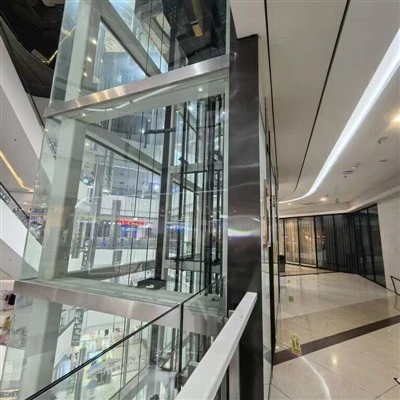
First, we have to start with the unique demands of hospital environments that set them apart from office or residential elevators. Office buildings might have predictable peak times—9 a.m. to 10 a.m. for commuters, 5 p.m. for departures. Hospitals? Their traffic is sporadic, unpredictable, and high-stakes. At 2 a.m., a code blue on the third floor can send three stretchers, a wheelchair, and a team of six staff into an elevator at once. A small outpatient wing might have 10 times more visitors on Tuesday afternoons than on Sundays. To handle that, we build hospital elevators with larger cabs first. A standard office elevator is 4 feet by 5 feet; a hospital stretcher elevator is 6 feet by 8 feet, with enough width to fit a full ICU stretcher, oxygen tanks, and a monitor without jostling. But size isn’t enough. We also reinforce the doors—they’re heavier, operate slower, and have wider sensors to make sure they don’t close on a wheelchair wheel, a walker, or a medical cart holding prescription medications. That extra width and strength add weight, so we use a traction system with more durable steel cables and a motor that’s calibrated not just for lifting heavy loads, but for stopping them smoothly.
Speaking of smooth stops, that’s a big one for patients. Think about a patient recovering from hip replacement surgery—jerking during an elevator ride can throw off their balance, cause pain, and even damage a surgical site. Or a newborn in a neo-natal intensive care unit (NICU), where even a small jolt can disrupt fragile equipment or a baby’s vital signs. That’s why we use variable frequency drives (VFDs) in all our hospital elevators. A VFD adjusts the motor’s speed gradually, not in sudden bursts. When the elevator is moving up, it accelerates slowly, maintains a steady speed, and decelerates 10 inches before the floor, so the stop is so smooth you might not even feel it. We test this extensively: in our factory, we attach a cup of water to the floor of an empty elevator and run it through 10,000 cycles to make sure not a single drop spills. It’s a small detail, but for patients and staff, it’s a difference between a calm ride and a stressful one.
Next, we build a traffic management system that’s tailored to hospital workflows, not just general building use. A lot of older hospitals have too few elevators, and their systems are programmed for “call the closest car” that’s typical in office buildings. That doesn’t work for hospitals, where departments have specific needs: the emergency department (ED) needs elevators that are never more than 30 seconds away, the surgical wing needs to prioritize post-op transfers, and the outpatient wing needs to serve visitors without blocking critical staff traffic. Our traffic management system uses real-time data to adjust to these needs. It can pre-position elevators near the ED during peak hours after a mass casualty incident, for example. It also has a “priority mode” that staff can activate—with a simple card swipe, an elevator will come immediately to their floor, skipping any stops for visitors. We’ve worked with a large urban hospital in Chicago that was dealing with frequent delays between the ED and the trauma bay; after installing our system, average wait times dropped by 40%. Staff told us that small change meant they got to trauma patients a lot faster, and that was the kind of impact that makes the work worth it.
Then there’s maintenance, which is where a lot of elevator suppliers fall short. Hospital elevators can’t break down—ever. Even a 20-minute outage during a busy shift can cause a stack of stretchers waiting at the main lobby, or a nurse missing a medication round. That’s why we offer a 24/7 on-call service specifically for hospital clients, not the general maintenance packages we offer for office buildings. Our service technicians are trained to work around hospital schedules—we don’t schedule routine maintenance during peak visiting hours, or during major surgeries. We also install predictive monitoring technology: every elevator has sensors that track cable tension, motor temperature, and door operation in real time. If a cable starts to wear thin, or a door sensor is starting to fail, our team gets an alert before the part breaks. A rural hospital in Iowa had a predictive monitor flag a small issue with an elevator’s door motor at 1 a.m.; our technician was on-site by 4 a.m. to fix it, without disrupting a single patient’s morning appointments. That’s the kind of reliability hospitals need.
We also have to think about accessibility, which isn’t just a checkbox for hospital elevators—it’s a necessity. Patients with mobility issues, from those using manual wheelchairs to those with neuromuscular disorders, need elevators that are easy to operate, with large, braille buttons, and a voice announcement system that clearly states each floor. But we go beyond the minimum requirements. We make the voice announcements slower and louder, so hard-of-hearing patients don’t miss their stop. We add a visual alert, too—flashing lights that match the floor number, for patients who are deaf or hard of hearing. For patients with cognitive disabilities, like dementia, we label buttons with pictures (a bed for the inpatient floor, a stethoscope for the doctor’s office) so they can easily find the floor they need. We worked with a pediatric hospital in Boston that told us their young patients were often scared of elevators, especially when they were sick and tired. We added fun, kid-friendly decals (but not too distracting) and adjusted the speed a little faster for shorter rides, so kids don’t have to wait as long. The hospital reported a 25% drop in complaints about elevator anxiety after that change.
But it’s not just patients and staff—our elevators also have to work with the medical equipment that’s essential to care. A standard elevator can’t fit a CT scanner, or a linear accelerator for radiation therapy. We work with hospitals to customize elevator sizes and configurations for large medical equipment. For example, a hospital expanding its oncology wing might need an elevator that can fit a 12-foot linear accelerator, so patients don’t have to be transported on a specially designed cart through hallways. We also reinforce the elevator’s structure to support up to 10,000 pounds, which is twice the weight of a standard office elevator. That might sound excessive, but when you’re moving a 5,000-pound radiation machine, every pound counts. We also coordinate with the hospital’s facilities team to make sure the elevator’s doorways, ceilings, and even the electrical wiring can accommodate the equipment without modification, which saves time and money during installation.
One of the most common misconceptions I hear is that any elevator can work in a hospital. But last year, we had a client who tried to use a standard office elevator in their new wing, and they had problems almost immediately. The elevator was too slow, the stops were jerky, and it couldn’t handle the volume of visitors. They ended up replacing it with our hospital model, and told us it was one of the best investments they’d made. That’s why we don’t sell one-size-fits-all elevators—we take the time to visit each hospital, talk to their staff, map their traffic patterns, and design a solution that fits their unique needs. Whether it’s a small community hospital with 50 beds or a large academic medical center with 1,000 beds, every hospital has its own rhythm, and our elevators have to match that.
At the end of the day, what drives all of this is a simple goal: to make hospital elevators work for the people who need them most. It’s not about building a fancy machine—it’s about building a tool that gets a patient to surgery on time, a nurse to a code blue fast, a family to a loved one’s room without waiting. If you’re a hospital administrator, facilities manager, or healthcare leader looking to upgrade your elevators and improve patient care, we’d welcome the chance to discuss how our hospital-specific solutions can make a difference.
Passenger Elevators References
- American Society of Mechanical Engineers (ASME) A17.1 Safety Code for Elevators and Escalators, Chapter 16: Healthcare Elevator Requirements
- Healthcare Facilities Journal, “Elevator Traffic Management: Optimizing Flow in Acute Care Settings,” 2022
- National Fire Protection Association (NFPA) 101, Life Safety Code, Healthcare Occupancy Provisions
- Elevator World Magazine, “Predictive Maintenance for Medical Elevators: Reducing Unplanned Outages,” 2021
Ningbo Dongao Elevator Co., Ltd.
As one of the most experienced hospital elevator manufacturers and suppliers in China, we also support customized service. We warmly welcome you to buy high quality hospital elevator for sale here from our factory. For quotation, contact us now.
Address: No. 16 Xiapan Road, Ninghai County, Ningbo City, Zhejiang Province
E-mail: 13777289058@163.com
WebSite: https://www.daelevator.com/
